Most buyers approach compliance certification the way they approach final packaging—something to tick off once the product is "done." The assumption is straightforward: design the custom drinkware, finalize the samples, lock in the production run, and then send a few units for FDA or LFGB testing. If the tests come back clean, ship. If not, make a small tweak and retest. In practice, this is often where the customization process decisions start to be misjudged, because certification is not a rubber stamp—it is a constraint that should shape material selection, surface treatment, and decoration methods from the very beginning.
The core issue is that compliance testing evaluates the entire material stack: base metal composition, surface finish, coating chemistry, ink formulation, and even the adhesive used to bond decorative elements. A single out-of-spec component—say, a pigment that leaches cadmium under acidic conditions—can fail the entire batch. When that failure surfaces after tooling is cut and production samples are approved, the buyer faces a choice: accept a multi-week delay to redesign and retest, or abandon the market that requires that certification. Neither option is trivial, and both could have been avoided if compliance had been treated as a design input rather than a post-production formality.
Consider a scenario where a brand specifies a deep blue Pantone for a stainless steel tumbler line destined for both U.S. and German markets. The factory sources a powder coat that matches the color and passes internal adhesion tests. Samples are approved, and the first production run begins. Only after the run is complete does the buyer request FDA and LFGB certificates. The FDA test passes without issue, but the LFGB migration test—which uses a more aggressive acidic simulant—reveals that the powder coat releases trace amounts of a restricted organic compound. The product cannot be sold in Germany without reformulation. The factory must now source an LFGB-compliant alternative, recoat a batch of samples, and resubmit for testing. That process adds 18 to 25 days to the timeline, and the buyer must either delay the European launch or split the order into two separate production runs with different coatings. The cost and schedule impact stem entirely from the decision to defer compliance until after the design was locked.
This pattern repeats across material categories. Silicone gaskets, for example, are often selected based on color match and sealing performance, with little attention paid to whether the formulation complies with FDA 21 CFR 177.2600 or LFGB sensory requirements. If the gasket fails a migration test, the buyer cannot simply swap it out—the new gasket may have a different compression set or thermal expansion coefficient, requiring retooling of the lid assembly. Similarly, laser engraving on stainless steel can alter the surface chemistry in ways that affect heavy metal leaching, especially if the engraving depth exposes subsurface alloy layers. A design that looks clean in a visual inspection may fail a lead or nickel migration test, forcing a switch to a shallower engraving depth or a different decoration method entirely.
The timing problem is compounded by the fact that different markets impose different thresholds and test protocols. FDA testing for drinkware typically focuses on extractable heavy metals and overall migration under neutral and acidic conditions, with relatively permissive limits for certain elements. LFGB, by contrast, includes sensory evaluation—odor and taste transfer—alongside chemical migration, and uses test conditions that simulate prolonged contact with hot, acidic beverages. California Proposition 65 adds another layer, requiring warning labels for any product that contains even trace amounts of listed carcinogens or reproductive toxins, regardless of whether those substances migrate under normal use. A product that passes FDA scrutiny may still trigger Prop 65 labeling requirements if the raw material contains a listed substance, even if it is fully encapsulated. Buyers who assume that a single certificate covers all markets often discover, too late, that they need separate tests—and potentially separate formulations—for each regulatory regime.
The economic impact of late-stage compliance failures extends beyond direct testing costs. If a production batch is already manufactured and fails certification, the buyer must decide whether to scrap the inventory, attempt rework (which is often impractical for coatings or surface treatments), or accept a narrower market scope. If the failure is discovered during a customs inspection rather than proactive testing, the shipment may be detained or rejected outright, with storage fees and demurrage charges accruing daily. Even if the product eventually clears, the reputational damage from a delayed launch or a publicized compliance issue can outweigh the financial loss.
The solution is to integrate compliance requirements into the material and process selection phase, before any tooling is committed. This means specifying not just the desired aesthetic or functional properties, but also the regulatory markets the product must serve. A factory that knows upfront that a tumbler line must pass both FDA and LFGB will default to materials and coatings with a proven track record in both regimes, rather than optimizing solely for cost or color match. It also means requesting test reports for the specific material lot numbers that will be used in production, rather than relying on generic certificates that may not reflect the actual supply chain. Some factories maintain libraries of pre-tested material combinations—for example, a specific stainless steel grade paired with a specific powder coat and a specific silicone gasket—that are known to pass all major certifications. Buyers who work within those validated combinations can avoid the risk of late-stage failures, even if it means accepting a slightly narrower range of aesthetic options.
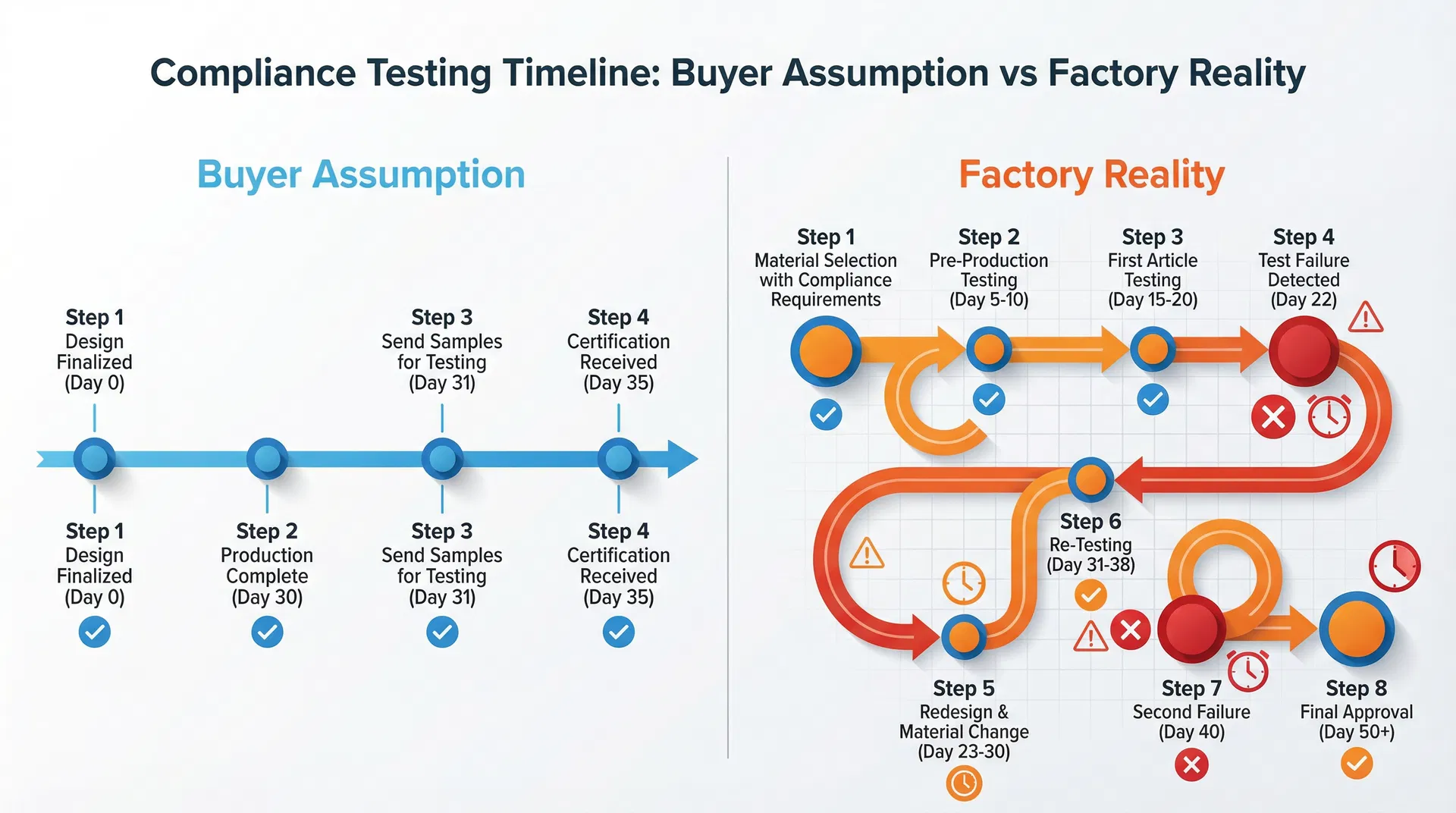
Another critical step is to conduct compliance testing on the first production sample, not the pre-production prototype. Prototypes are often hand-assembled using materials that may differ slightly from the final production batch, and small variations in alloy composition, coating thickness, or curing temperature can affect test outcomes. Testing the first article from the actual production line—using the same materials, the same equipment, and the same process parameters—provides a much more reliable indicator of whether the full batch will pass. If a failure does occur at this stage, the impact is limited to a single production run rather than an entire inventory.
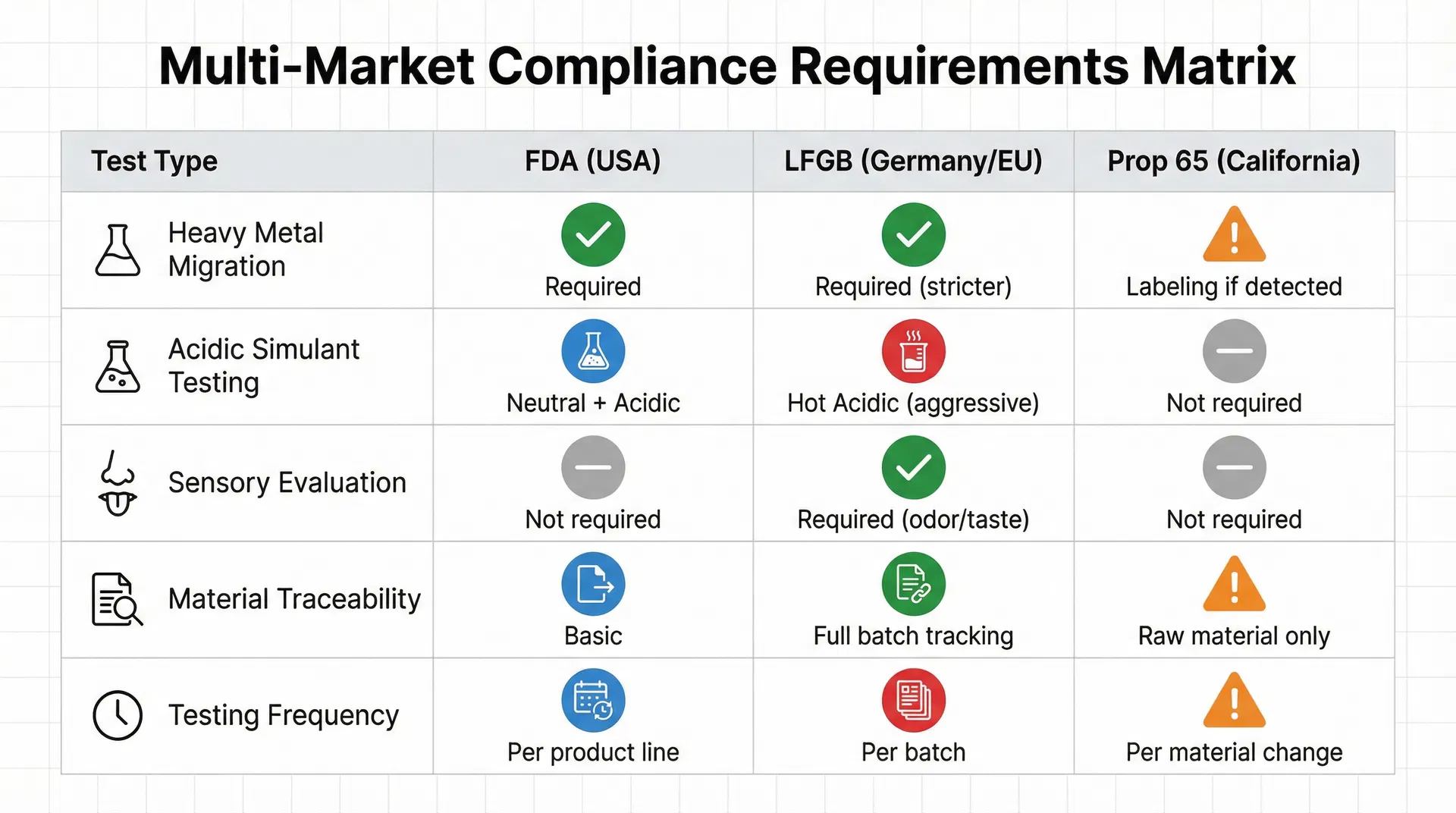
Buyers should also be aware that compliance is not a one-time event. If any material or process changes during the product lifecycle—a new supplier for the powder coat, a different curing oven, a reformulated silicone gasket—the product must be retested. Factories sometimes make these changes without notifying the buyer, especially if the change is perceived as minor or cost-neutral. A proactive buyer will include a clause in the purchase agreement requiring notification and retesting for any material or process substitution, and will periodically audit the factory's material traceability records to ensure that the certified formulation is still in use.
The broader lesson is that compliance certification is not a checkpoint at the end of the customization process—it is a constraint that defines the boundaries within which all other decisions must operate. Treating it as an afterthought introduces risk at every stage: material selection, tooling, production, and market entry. Buyers who recognize this early, and who structure their sourcing and design workflows accordingly, avoid the delays, costs, and market access issues that plague those who defer compliance until it is too late to course-correct.